When people think about refugees, they often think about loss, trauma, and displacement. While those realities are undeniably part of the refugee experience, they are not the only stories being brought into our communities. What often goes unseen are the gifts refugee families bring with them: resilience forged through hardship, resourcefulness born from learning to navigate uncertainty, deep dependency on God, strong family bonds, and a commitment to serving others despite immense obstacles.
Too often, refugee communities are viewed primarily through the lens of need. Yet time and again, our refugee neighbors prove to be teachers as much as recipients, contributors as much as beneficiaries, and ministers to the broader community in ways that often go unnoticed.
Tristan’s story is one of those stories.
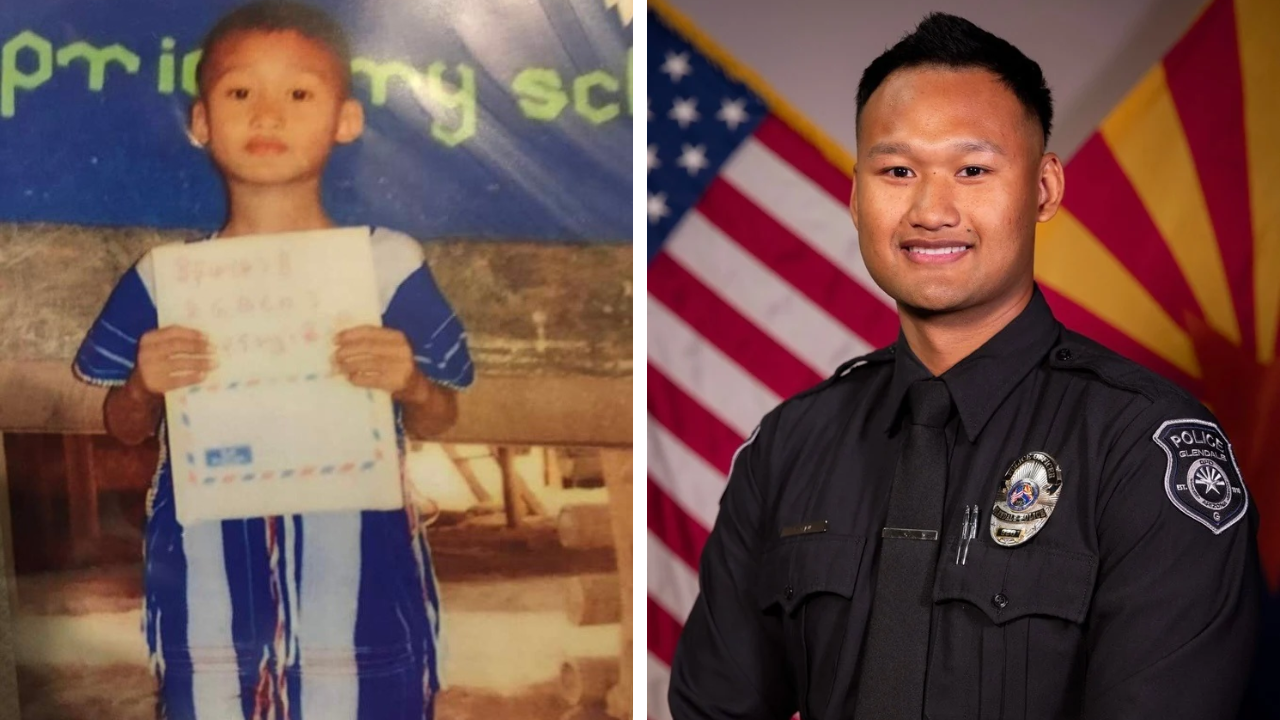
From Refugee Camp to Phoenix, AZ
When Tristan was 6-years-old, he boarded a plane with his family and left behind the only world he had ever known. He was born in Mae La, a refugee camp along the Thailand-Myanmar border. His parents had fled violence after their villages were attacked and burned amid the ongoing conflict in Myanmar’s Karen State. Life in the camp was confined and limited. There were no cell phones. No electricity. Homes were built from bamboo, wood, and leaves.
Then one night, everything changed.
“I remember getting on the plane when it was dark,” Tristan recalled. “When we landed in Arizona, it was still dark. Everything was different. Everything felt weird.”
Phoenix would eventually become home, but the transition was not easy. When Tristan started school, he didn’t speak English. By second grade, even asking to use the restroom felt challenging. He remembers feeling isolated and struggling to understand a new culture while trying to fit in. Other children sometimes bullied him.
Yet amid those struggles were people who helped make a new place feel a little less foreign. “Some teachers knew we were refugees and helped us a lot,” he remembered.
At the same time, his parents were learning how to navigate life in a country vastly different from the one they had known. Educational opportunities had been limited for them. His mother attended school through first grade and his father through fourth grade. Still, they nurtured hopes for their children that exceeded what seemed possible at the time. As the family adjusted to life in Arizona, Tristan and his older sister often found themselves translating at parent-teacher meetings and other appointments, helping bridge the gap between two cultures.
Looking back, Tristan speaks about his parents with profound gratitude. “They sacrificed so much for us,” he recalled. “They came to a new country where they didn‘t know the language or culture. They worked hard so we could have opportunities. After all they’ve done for us, I’ve always wanted to make them proud.”
A Faith That Became His Own
Like many children raised in church, Tristan’s faith journey took time. “When I was younger, I didn’t want to go to church,” he admitted. “My parents made me go.” However, over the years, faith became more than a family expectation. Around age nineteen, Tristan began taking his relationship with God seriously. He credits much of that growth to his fiancee, whose encouragement drew him closer to Christ. In April 2022, he was baptized.
“God has always been there for me every step of the way,” he said. “I haven’t always been faithful, but He’s always been faithful.”
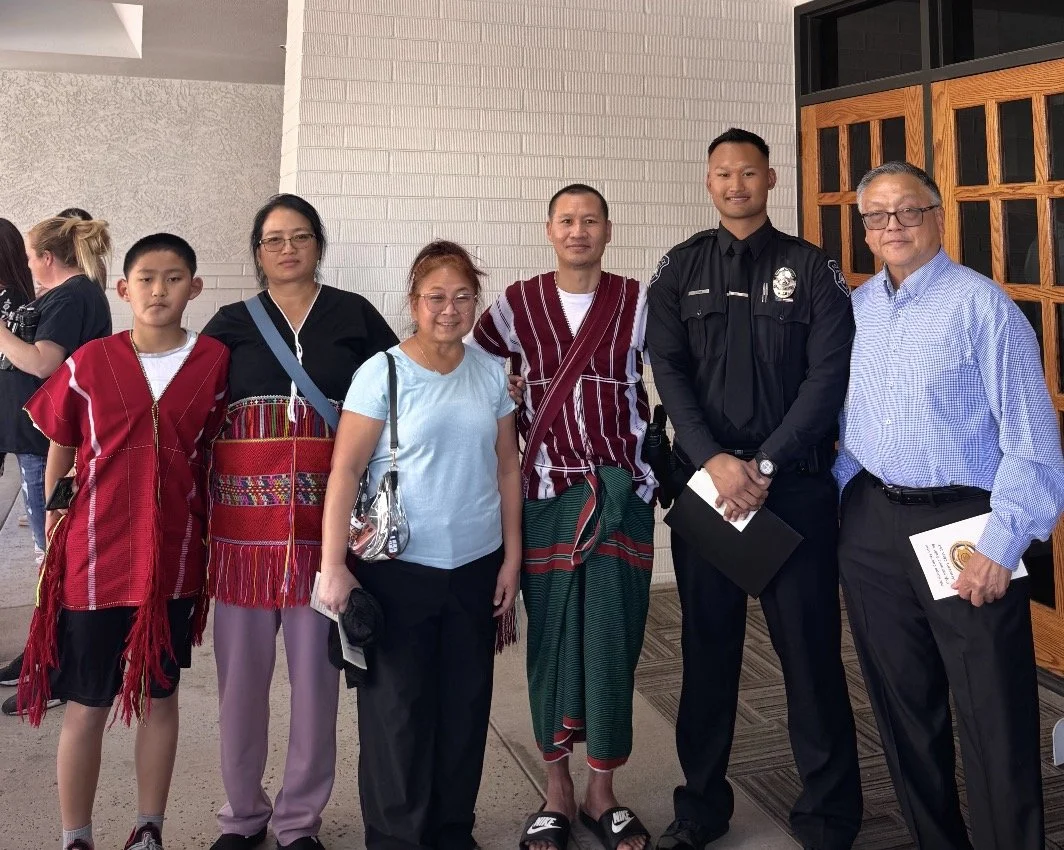
Today, Tristan worships at Arizona Karen Baptist Church, a congregation largely composed of refugees from Burma. For him, the church has been more than a place of worship. It has been a place of encouragement, accountability, and belonging. A community of people who understand both the challenges of starting over and the faithfulness of God through it all.
Called to Serve
After high school, Tristan studied criminal justice and began pursuing a career in law enforcement. His interest was first sparked by television crime shows, but he soon discovered that policing was far more demanding that he had imagined.
The hiring process alone tested his resolve. He failed his interview. Then, he failed it again. “There were times I doubted myself,” he recounted. Instead of giving up, he reached out and asked for feedback. One sergeant took the time to explain where his shortcomings were and personally coached him through the interview process.
“I prayed every single day,” Tristan shared. “I kept working on public speaking and preparing.” Eventually, his perseverance paid off.
Then, came the pre-academy. Days began before sunrise and ended long after midnight. Grueling workouts, lengthy assignments, inspections, drills, and constant evaluation pushed recruits to their limits. Some nights, Tristan survived on only a few hours of sleep. There were moments he thought about quitting, but he didn’t.
His church prayed, his family and fiancee encouraged him, and his fellow recruits pushed one another forward. Step by step, he made it through. When graduation day finally came, it was more than a personal accomplishment. It represented years of sacrifice from family members, encouragement from mentors, prayers from his church community, and God’s faithfulness through every obstacle.
For the Good of the City
Today, Tristan serves as a police officer in Glendale, Arizona. When asked about what “protect and serve” means to him, he talks about being there for the community.
“A lot of people are going through difficult situations,” he explained. “Sometimes they’re having the worst day of their lives when we show up.” From mental health crises to domestic violence calls, he has witnessed intense pain and suffering. The work often has an emotional weight that most people never see.
“I try to use my position the best I can to help people.”
Growing up in a lower-income refugee community helped shape his perspective. He understands what it feels like to struggle, to feel overlooked, and to need someone willing to walk alongside you. Those experiences continue to influence the kind of officer he hopes to be: someone who serves with humility, compassion, and integrity.
For the Next Generation
Tristan also hopes his story broadens people’s understanding of refugee communities.
“Refugees are hard workers!” he emphasized. “They’re dreamers. They see opportunities. They want the same things everyone else wants.”
Within the Karen community, he hopes younger students can see possibilities for their own futures. “There are kids who don’t think they’re capable,” he noted. “I want them to know they can become what they want to become.” Tristan used to teach Sunday school at his church. Even now, he understands that younger children are watching. His example matters. He doesn’t believe that everyone should become a police officer, but he does hope every young person can see that their future is not determined by where they started or by their present circumstances.
The Work of Many Hands
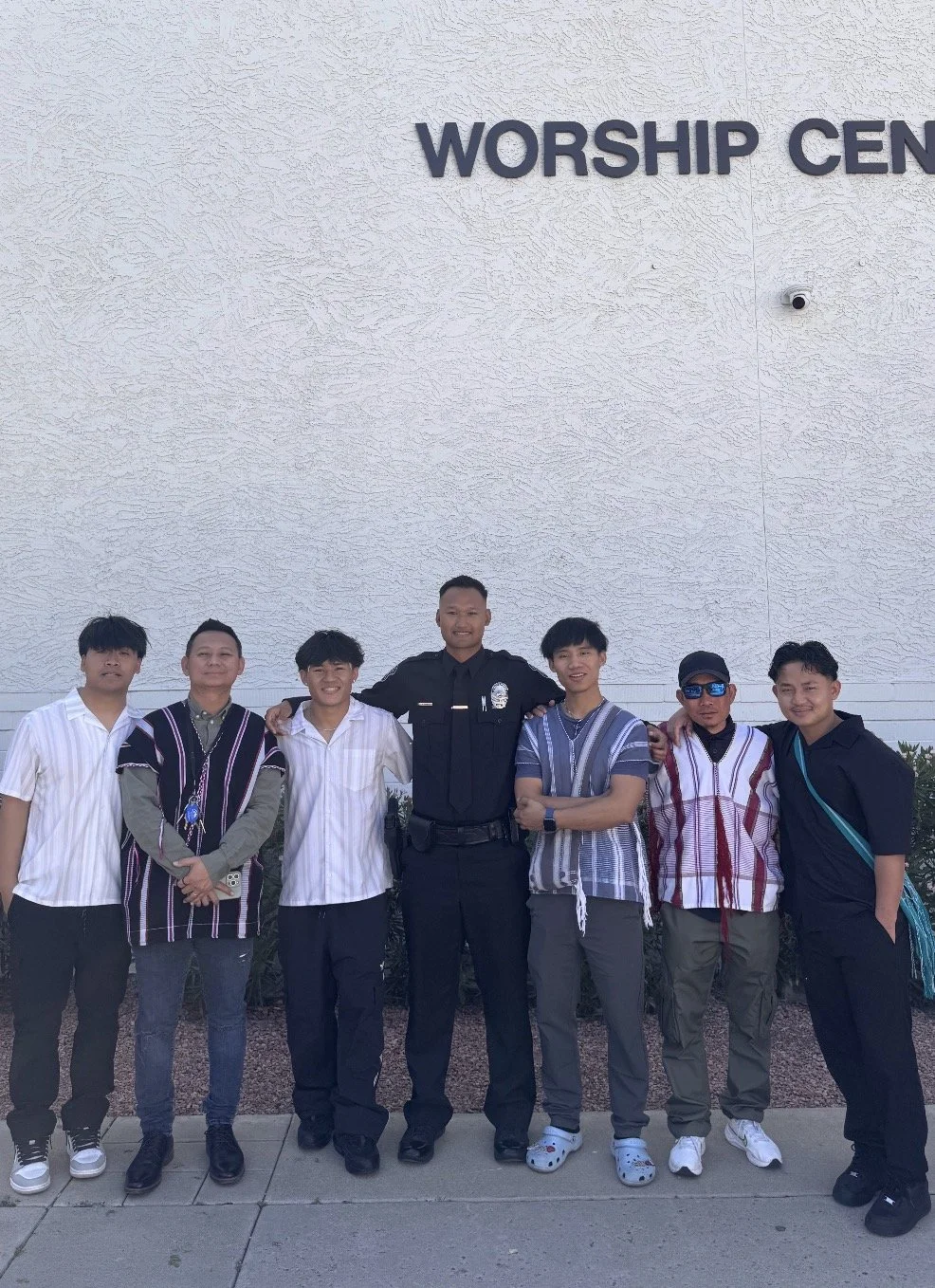
When asked where he has seen God’s hand most clearly throughout his journey, Tristan doesn’t mention his graduation day or the badge on his uniform. Instead, he names the people God placed in his life: his parents, his church, his fiancee, a mentor who offered guidance, and the teachers who helped a child find his footing in a new country.
“God has always been there through everything,” he acknowledged.
There’s a temptation to look at a story like Tristan’s and focus on the individual achievement, but no one arrives at a moment like this alone. Behind every milestone are countless acts of faithfulness. Much of God’s work happens this way. Often, the seeds people plant bear fruit they may never fully see this side of eternity.
Tristan’s story is not about one man’s material accomplishments. It’s a testimony to the faithfulness of God working through many hands. A boy born in a refugee camp now serves and protects the city he calls home, carrying forward the love, sacrifice, and faith that helped him along the way.